Charity is one of the most prominent pillars of Islamic practice. It purifies wealth, protects the giver from calamities, and ensures that resources flow from the affluent to those in distress. However, many donors struggle to understand the distinct rules governing different forms of giving: Zakat (obligatory alms), Sadaqah (voluntary charity), and Fitrana (Zakat al-Fitr).
Each of these three types of charity has unique rules regarding obligation, timing, Nisab (threshold), and who is eligible to receive them. Giving Zakat to the wrong person can render it invalid under Shariah, while holding back Fitrana beyond Eid prayer compromises its purpose. At IQRA Welfare Trust, our team in Madanpur Khadar, New Delhi handles separate disbursement protocols for Zakat, Sadaqah, and Fitrana to maintain 100% religious compliance. This comprehensive guide outlines the rules, Nisab thresholds, and differences between these terms so you can donate with confidence.
What This Guide Covers
Side-by-Side Comparison: Zakat, Sadaqah, and Fitrana
To understand the differences at a glance, here is a quick reference table contrasting the three major categories of Islamic giving:
| Feature | Zakat | Sadaqah | Fitrana (Zakat al-Fitr) |
|---|---|---|---|
| Obligation Status | Mandatory (Fard) | Voluntary (Nafl) | Mandatory (Wajib) |
| Rate / Amount | Fixed (2.5% of surplus wealth) | No limit (Any amount/action) | Fixed (Approx. 2.5kg of staple food/value) |
| Nisab (Threshold) | Yes (Value of 87.48g gold / 612.36g silver) | No (Anyone can give) | Yes (Adults with excess food/assets beyond basic need) |
| Timing of Payment | Any time once lunar year (Hawl) finishes | Any time of year, day or night | Before Eid al-Fitr prayer at end of Ramadan |
| Eligible Recipients | Strictly 8 Quranic categories (Asnaf) | Unrestricted (Anyone, including public works) | Strictly the poor & needy (Fuqara & Masakin) |
Zakat: Rules, Nisab, and Obligation
Zakat is the third pillar of Islam and is a mandatory financial obligation for all mentally sound, adult Muslims whose personal wealth meets or exceeds the **Nisab** threshold for a full lunar year (Hawl).
The Nisab Limit: The threshold of wealth is determined by either the gold standard (87.48 grams of gold) or the silver standard (612.36 grams of silver). In modern times, the silver standard is commonly used by NGOs in India to calculate Nisab because it allows more low-income families to benefit. If your net assets (cash, gold, silver, shares, business inventory) exceed this threshold after deducting immediate liabilities, you must calculate and pay 2.5% of that total amount.
Nisab Calculation Example
If the current price of silver is ₹85 per gram, the silver Nisab threshold is ₹52,050 (612.36g × ₹85). If your personal savings and eligible assets remain above ₹52,050 for a full lunar year, you are obligated to pay Zakat. For assets of ₹2,00,000, your annual Zakat is 2.5% = ₹5,000.
Sadaqah: Voluntary Charity & Sadaqah Jariyah
Sadaqah is a voluntary form of charity that can be given by anyone, at any time, in any amount. Unlike Zakat, it has no Nisab limit and is not bound by any rigid calculation rules.
While Zakat must be given as financial assets directly to eligible individuals, Sadaqah is broad and flexible. It can be used for public welfare projects (like building hospitals, water pipelines, or schools), and it can even take non-monetary forms. The Prophet Muhammad (peace be upon him) said: "Smiling in the face of your brother is charity (Sadaqah)." (Jami` at-Tirmidhi).
Sadaqah Jariyah is a highly valued sub-category of Sadaqah. It refers to ongoing charity projects that provide continuous utility to people. Examples include sponsoring orphan child education, installing water hand pumps, or establishing medical camps. Even after the donor passes away, the rewards continue to accrue as long as the project benefits others.
Fitrana (Zakat al-Fitr): Ramadan Specific Obligation
Fitrana, or Zakat al-Fitr, is a mandatory charity paid at the end of Ramadan before the Eid al-Fitr prayer. It is required of every Muslim who possesses food or assets in excess of their basic needs, and the head of the household must pay it on behalf of themselves and all their dependents (including children).
The main purpose of Fitrana is to clean the donor's fast from minor errors and to ensure that the poorest members of the community have enough food to celebrate Eid al-Fitr alongside everyone else.
The Fitrana Rate: Historically, the rate is equivalent to one Saa' (approximately 2.5 kg) of staple food like wheat, barley, dates, or raisins. In modern monetary terms, this rate is calculated by local scholars annually. For example, in 2026, the estimated Fitrana rate in India ranges between ₹80 to ₹150 per person, depending on the staple commodity chosen.
Who is Eligible to Receive Zakat vs Sadaqah?
This is the most critical area of compliance. Zakat has strict Quranic recipient rules, whereas Sadaqah is flexible.
According to Surah At-Tawbah (9:60), Zakat must only be given to the **Eight Eligible Categories (Asnaf)**:
- The Poor (Al-Fuqara): Those with zero or extremely low income.
- The Needy (Al-Masakin): Those who cannot fulfill their basic needs despite some income.
- Zakat Administrators: Those employed to collect and distribute Zakat.
- Those Recited to Islam: To reconcile hearts and support new Muslims.
- To Free Captives/Slaves: For liberation and debt relief.
- Debtors (Al-Gharimin): Those overwhelmed by essential debt.
- In the Cause of Allah (Fi Sabilillah): Those striving in spiritual or educational paths.
- The Wayfarer (Ibnu Sabil): Travelers who have run out of funds.
Recipient Restrictions: Zakat cannot be used for administrative infrastructure like building mosques, laying roads, or general NGO salaries (unless they fall strictly under Zakat collectors). It must also not be given to immediate family members (spouse, children, parents) whom you are already legally obligated to support. Sadaqah, however, can be used for any general public utility or welfare purpose.
Shariah Compliance at IQRA Welfare Trust
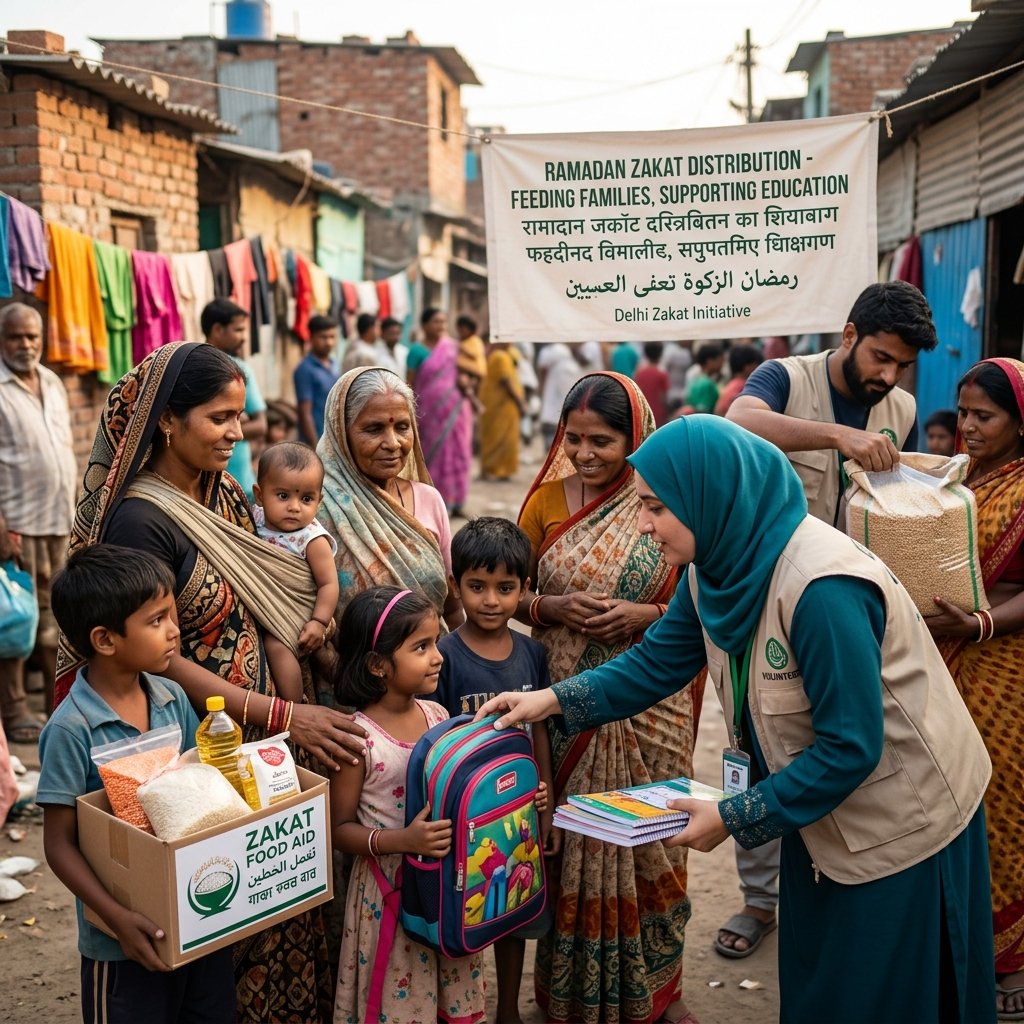
We maintain separate bank accounts and physical registers for Zakat and Sadaqah. Zakat funds are utilized exclusively to pay for direct medical treatments, orphan school uniforms/fees, and ration packages for widows and eligible families (Tamleek), ensuring 100% theological validity.
Disburse Your Zakat & Sadaqah Correctly
Join our missions in Delhi NCR slums. Settle your Zakat, Sadaqah, or Fitrana obligation securely and receive tax exemption receipts.
Related Guides
Frequently Asked Questions
Quick theological answers on the rules of Islamic charity.
Zakat is a mandatory annual alms (2.5% of surplus assets) required of every adult Muslim whose wealth meets the Nisab limit. Sadaqah is entirely voluntary, can be given in any amount at any time, and can include non-monetary acts of kindness.
Eligibility is restricted to the eight categories listed in Surah At-Tawbah (9:60), primarily the poor, needy, debtors, and travelers. Fitrana (Zakat al-Fitr) is specifically intended to feed the poor before Eid. Immediate family members cannot receive your Zakat.
Fitrana is a mandatory charity paid by every Muslim (on behalf of themselves and dependents) before the Eid al-Fitr prayer at the end of Ramadan. It equals approximately 2.5 kg of wheat, rice, or dates (or its cash value) per person.
Yes, Zakat can be used for the education of poor and needy children. IQRA Welfare Trust implements Zakat under Tamleek by paying fees or distributing school kits directly to orphans and needy children, fulfilling compliance rules.
Yes. Donations made to registered NGOs like IQRA Welfare Trust qualify for a tax deduction of up to 50% under Section 80G of the Income Tax Act. We provide tax-exemption receipts automatically for every donation.
IQRA Welfare Trust Team
This guide was prepared by the IQRA Welfare Trust editorial team in Madanpur Khadar, New Delhi. For donation compliance, calculation queries, and receipts, contact us at +91-8057610395 or support@iqrawelfaretrust.in.